
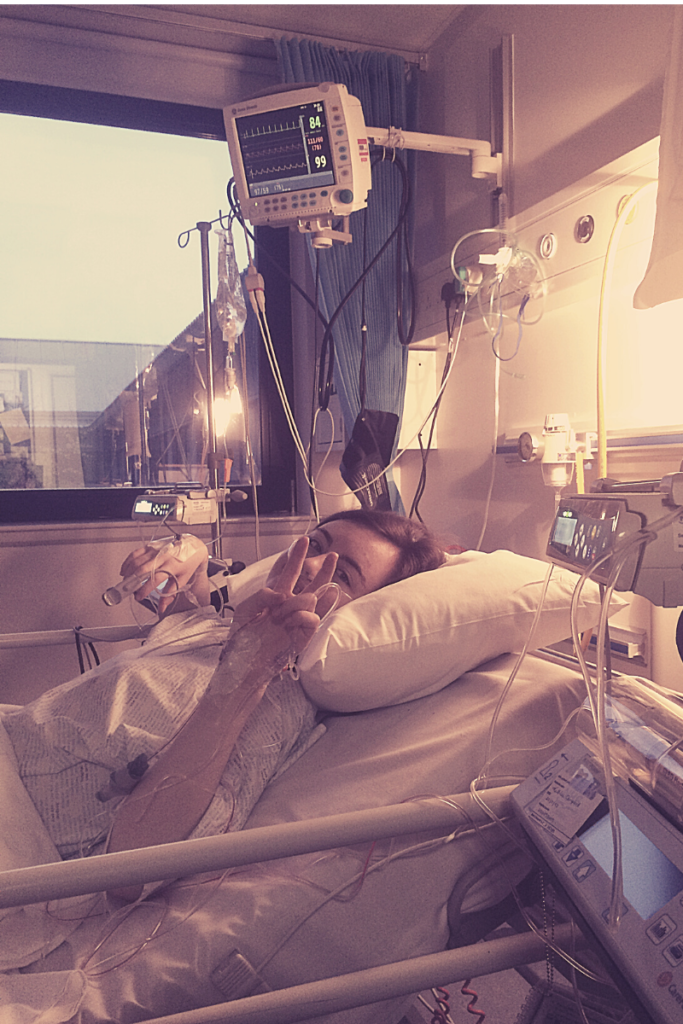
On this day five years ago, I lost one of my organs. Well… I say “lost” but that almost implies it fell out as I was walking down the street one day and I didn’t realise – which obviously isn’t the case. It was on May 18th 2016, I underwent a 4.5 hour surgery that left me waking up with one less organ than before.
Hi, I’m Kathleen, one of the 13.3 million people living with an invisible illness in the UK. I have spoken about this in the past on my old ‘sister blog’, Living A Life With…, but since then, I’ve closed that blog down, and I’ve never republished the content.
My invisible illness isn’t something I can take off and put away when I don’t want to wear it. It’s here to stay much like an unwelcome squatter living in the darks of my body. As much as it would be nice to tell it to leave, I’ll never be able to kick it out. It’s as much of me as my brain, my heart, my bones, and my blood. It’s been here since the start, and it’ll be here till the end.
I came to terms with it, making a promise to myself that I would not let it define me, stop me living my life exactly how I wanted to live it, or to get in the way of achieving my dreams and goals.
Found on my phone, this recording from two months post-surgery caught me off guard. It was poignant and now, I wish to share it, revealing how words’ meanings differ for the speaker and the listener.
Last year when going through my phone, I came across a voice recording that I had completely forgotten about. It was recorded two months after my surgery, during which I was on hiatus from blogging to focus on recovery. The recording caught me off guard as I had no recollection of what I had said. Listening to it, it was poignant.
I want to share it with you as it reveals how words, said with the best of intentions, can mean one thing to you but something completely different to someone else
So here we are. What you are about to read is my two-minute voice recording that I have transcribed, carrying with it a vulnerability that turns sharing this into an invitation, allowing you to glimpse a more private part of my journey.
“You’re such an inspiration”, “you’re so strong”. I’ve heard this a lot, especially when I was in hospital, and I know you mean well, but I didn’t want to be an inspiration. I wanted to be back normal again, not to be throwing up all the time or to have multiple cannulas in my hands or tubes attached. I wanted to be back home and live normally again and enjoy life. I didn’t want to be sitting in a hospital bed stuck in the same four walls regretting the surgery and wishing I wasn’t there.
Although most remarks like this are said with only the best intentions, most people don’t seem to be aware of how they are saying it and the circumstance surrounding it, which changes the meaning the words hold and what they are actually telling me. It’s a hard one to explain, but I hope I get the point across of what I’m trying to say.
[My invisible illness] brings its challenges and can be physically difficult and demanding, but it takes a bigger toll on my mental wellbeing. For me, the first issue with being called strong for living with an invisible illness is that it brushes away my struggles and feelings. I’m not strong, and I’m physically and even more mentally exhausted after six years of coping with an invisible illness, and I’ve got the rest of my life to go.
I’m living what I thought was a nightmare, being different and alone. I have gone through some extremely tough times, and I will continue to do so, but by telling me things like “I couldn’t go through what you’ve gone through” is like telling me you think my life as an invisibly ill person hasn’t been worth the battle I’ve gone through, and will continue to go through. That all the blood, sweat, and tears poured out – sometimes quite literally – is worthless because what you are saying is life living with an invisible or chronic illness can only take a certain someone, otherwise it is not of value. Well that’s wrong, our lives are of so much worth and I want to highlight that. At the end of the day what you are saying comes across as I am strong for living my life and because of that I am an inspiration. Well trust me, you would do it too because an illness or condition doesn’t ask whether you want it or not, nor does it pick people who it thinks can cope with it. And me living with what [my invisible illness] brings shouldn’t be your reminder of how fortunate and ‘lucky’ you are. It shouldn’t inspire you and I’m certainly not your inspiration because I’ve chosen to live my life.”
I want to acknowledge that the tone of this post might come across as assertive or frustrated, maybe even passive-aggressive, but that was not my intention. At the time of recording, I was in an extremely challenging place, struggling not only physically but also with my mental health. This piece is meant to shed light on why certain remarks may be perceived differently than intended. It’s not about ill will or negativity, but rather a sincere attempt to convey the complexities of living with an invisible illness. Thank you for understanding.


